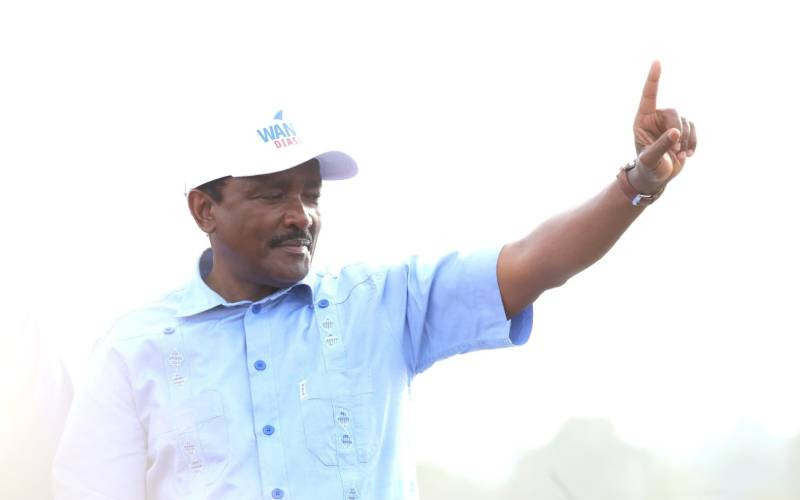
As Kenya approaches the 2027 general election, one question is rising across political circles and public debate: Can Kalonzo Musyoka finally ascend to the presidency?
With a rebuilt political profile, growing opposition unity, and shifting voter demographics, the former Vice President stands at the center of a rapidly changing electoral landscape. This article breaks down the data, coalition dynamics, and strategic variables shaping his chances.
1. The Numbers: What Voter Registration Data Says About 2027
1.1 IEBC Registration Progress and Projections
- IEBC had registered just over 90,000 new voters by 31 October 2025.
- Target: 6.8 million new voters before the 2027 general election.
- Expected total roll: 28.5 million voters, up from 22.1 million in 2022.
Why This Matters for Kalonzo
This massive registration gap represents a historic electoral opportunity. Youth (18–35) will form the largest share of new voters—and they remain politically fluid, issue-driven, and open to alternative leadership.
If Kalonzo’s camp captures even 20–30% of new registrations, it could significantly shift the national race.
2. The United Opposition: Rising Strength or Fragile Alliance?
2.1 Signs of Growing Opposition Coordination
Recent developments suggest momentum toward a viable united front:
- A technical committee and central secretariat are already crafting a unified campaign strategy.
- Major leaders—Kalonzo Musyoka, Rigathi Gachagua, Martha Karua, Eugene Wamalwa, Fred Matiang’i—have aligned on broad goals.
- Dr. Mukhisa Kituyi serves as the coalition’s spokesperson, injecting technocratic credibility.
- National polling shows many Kenyans believe the coalition will remain intact through 2027.
Kalonzo has positioned himself as the anchor of this unity effort, emphasizing anti-corruption, development, and youth-centered governance.
2.2 Key Weaknesses That Could Break the Coalition
Despite progress, several vulnerabilities could derail the alliance:
- Government/narrative pressure questioning opposition leadership coherence.
- Financial disadvantages relative to the incumbent’s resource network.
- Regional electoral challenges, with Ruto strong in Rift Valley and competitive in Mt. Kenya.
- Party popularity gaps, with UDA still far ahead in national party ID.
- Risk of defections if internal negotiations turn contentious.
Bottom line: The coalition has potential—but unity is not guaranteed.
3. Kalonzo Musyoka’s Path to the Presidency: Strengths, Polls & Regional Math
3.1 Leadership Profile and Experience
Kalonzo’s four-decade career includes:
- MP since 1985
- Minister for Education
- Foreign Affairs Minister (two terms)
- Minister for Environment
- Vice President (2008–2013)
- AU Special Envoy to South Sudan
These roles have shaped his image as an experienced mediator, diplomat, and institutional stabilizer—qualities that resonate during economic and political uncertainty.
3.2 Polling and Voter Base Strength
- Kalonzo leads the opposition field with ~36% support among opposition-aligned voters.
- He commands strong support in regions totaling 8.4 million registered voters, notably:
- Eastern region (his stronghold)
- Parts of Coast
- Select Central and urban counties
Battleground Counties That Will Decide 2027:
- Nairobi
- Kajiado
- Nakuru
- Kisii & Nyamira
- Busia & Vihiga
To win, Kalonzo must expand beyond Eastern and secure at least three major battlegrounds.
4. The Four Strategic Variables That Will Determine Kalonzo’s Fate
4.1 Voter Mobilization
The 6.8 million prospective new voters represent the single biggest wildcard.
Youth registration = Youth power.
4.2 Coalition Discipline
A split opposition guarantees an easy Ruto win.
A united one turns 2027 into a razor-thin contest.
4.3 A Winning National Message
Kalonzo must deliver:
- A clear economic plan
- A corruption accountability framework
- A youth-centered employment and digital economy agenda
Policy clarity—not just criticism—will be decisive.
4.4 Campaign Resourcing and Organization
A competitive national campaign requires:
- Financial muscle
- Digital strategy
- Grassroots mobilization
- County-level coordination
Without proper resourcing, momentum stalls.
CONCLUSION: Can Kalonzo Become Kenya’s Sixth President?
Yes—Kalonzo Musyoka has a realistic path to the presidency, driven by:
- A unified opposition
- A large new voter pool
- Rising national visibility
- Growing cross-regional acceptance
But the path remains difficult and narrow. His success depends on maintaining coalition unity, expanding into swing regions, mobilizing millions of new voters, and offering a bold national vision.
2027 is shaping up to be one of Kenya’s closest and most unpredictable races—and Kalonzo is undeniably at the center of it.watch video on our youtube channel and on https://www.tiktok.com/@tortha_news/video/7576337896244825400?is_from_webapp=1&sender_device=pc&web_id=7575236365568050744
No comments yet — be the first to join the discussion!