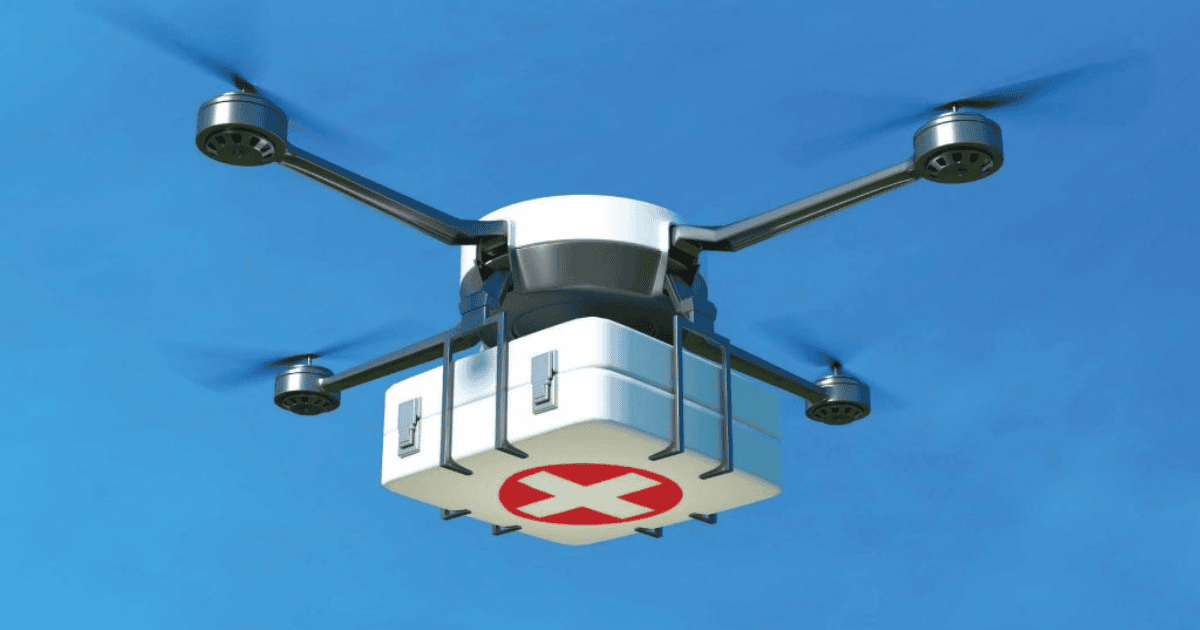
The U.S. government has announced a major $150 million (Ksh19 billion) commitment to expand drone-powered medical delivery systems across Kenya, Ghana, Côte d’Ivoire, Nigeria, and Rwanda. The investment supports Zipline, a leading U.S.-based autonomous drone logistics company known for delivering blood, vaccines, and emergency medicines to some of the hardest-to-reach communities.
With this new funding, Zipline plans to connect 15,000 health facilities and serve over 100 million people, significantly improving access to essential medical supplies in regions where poor road networks and long travel distances often slow down critical care.
A New Phase of the “America First” Global Health Strategy
This initiative is part of the U.S. government’s evolving “America First” global health strategy, which focuses on sustainability, accountability, and measurable impact. A key feature of the strategy is co-financing, meaning African governments must contribute to the program’s costs. U.S. officials say this helps ensure long-term ownership and reduces reliance on external funding.
Beyond healthcare access, the program integrates cutting-edge U.S. technologies—including AI-enabled logistics, automation, and robotics—directly into African health supply chains. That makes this not only a health initiative but also a major tech-transfer and modernization effort.
Economic and Strategic Impacts
Economically, the initiative opens new commercial pathways for American companies seeking to expand in African markets. It highlights the growing role of U.S. technological innovation in shaping global health delivery systems.
Strategically, it reinforces Africa’s importance in U.S. foreign and global health policy. The U.S. aims to advance national security and economic interests through performance-based bilateral agreements, strict accountability measures, and U.S.-centric procurement models.
However, this model has sparked debate. Critics argue that co-financing requirements and U.S.-driven procurement rules could increase fiscal pressure on African governments and limit local decision-making—raising questions about long-term health sovereignty.
Balancing U.S. Health Investments With African-Led Priorities
African countries have been working toward self-sufficiency, sustainable financing, and stronger regional cooperation in health. The “America First” approach, while offering immediate funding and advanced technology, does not always align perfectly with these homegrown strategies.
Experts say African governments will need to engage strategically—leveraging U.S. resources to strengthen local systems while safeguarding national health priorities and regional goals.
Why This Matters
If implemented effectively, the expanded drone network could revolutionize healthcare delivery across Africa. Faster emergency response, consistent access to medicines, and stronger supply chains could save countless lives, especially in underserved regions.
At the same time, the initiative signals a new era in U.S.–Africa health cooperation—one driven by performance, technology, and mutual economic interests.





No comments yet — be the first to join the discussion!