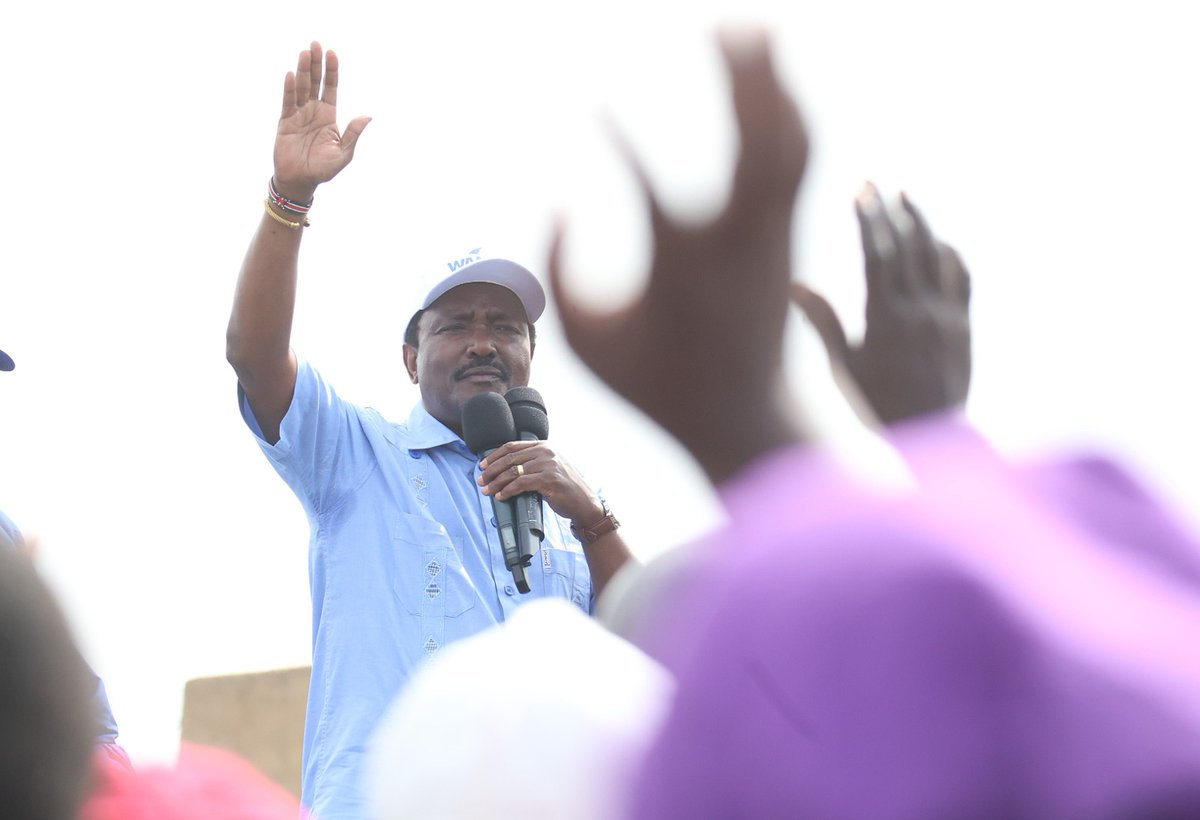
As Kenya’s political landscape braces for the 2027 general elections, a compelling question looms: who will best carry the late Raila Odinga’s legacy and advance the national development agenda embodied in Vision 2030? In the emerging United Opposition coalition, one name stands out — Kalonzo Musyoka.
Understanding Kenya Vision 2030
Launched in 2008, Kenya’s Vision 2030 is the country’s long-term development blueprint. Its aim is to transform Kenya into a newly industrializing, middle-income nation by 2030, offering a high quality of life in a clean and secure environment.
Vision 2030 is structured around three pillars:
-
Economic – macroeconomic stability, infrastructure, wealth creation
-
Social – health, education, housing, gender and youth development
-
Political – governance reforms, human rights, national cohesion
Implementation is done through successive Medium-Term Plans (MTPs), and Kenya is currently executing its Fourth MTP (2023–2027).
How Far Has Vision 2030 Come?
While Vision 2030 remains ambitious, the country has recorded meaningful progress in several areas — though significant gaps remain.
-
According to the Vision Delivery Secretariat’s reports, flagship projects like Konza Technopolis (the “Silicon Savannah”) and infrastructure works are underway.
-
Under the Fourth MTP, the government has committed to build 6,000 km of new roads, upgrade over 101,000 km of existing roads, and construct one million affordable housing units.
-
Infrastructure achievements: paved roads have more than doubled since 2007, from around 9,293 km to over 25,410 km by 2024.
-
In the energy sector, installed generation capacity has more than doubled, reaching over 3,200 MW.
-
On the social pillar, in the 2022–2023 financial year alone, 3.69 million students were enrolled in public secondary schools, reflecting progress toward universal transition.
-
However, critics note some shortfalls: for example, despite progress, not all flagship projects are complete, and certain targets (e.g., poverty reduction, inflation control) have lagged.
The United Opposition: A New Political Force for 2027
The United Opposition coalition formed ahead of the 2027 elections brings together several major parties:
-
Democracy for the Citizens Party (DCP) – Rigathi Gachagua
-
Wiper Democratic Movement – Kalonzo Musyoka
-
People’s Liberation Party (PLP) – Martha Karua
-
Democratic Action Party – Eugene Wamalwa
-
Democratic Party – Justin Muturi
-
Jubilee Party – backed by Fred Matiang’i People Daily
This alliance reflects a strategic recognition: a fragmented opposition risks diluting its strength, especially against a well-entrenched ruling bloc. The parties have agreed to coordinate campaigns, pool resources, and back joint candidates. People Daily
Why Kalonzo Musyoka Is the Best Fit
Here are several compelling reasons why Kalonzo Musyoka is uniquely positioned to carry both Raila Odinga’s political legacy and champion Vision 2030 in the next phase of Kenyan politics.
-
Experienced Leadership & Institutional Memory
-
Kalonzo has served as Vice President, and held senior ministerial roles (Foreign Affairs, Education), giving him a deep understanding of governance and international diplomacy.
-
His long career means he knows how to navigate Kenya’s political institutions, build consensus, and engage both domestic and foreign partners.
-
-
Bridge Between Generations
-
Many political analysts see Kalonzo as a compromise or unity candidate: both seasoned and respected but not polarizing in the way some younger or more populist figures might be.
-
He has long-standing relationships within the opposition, including loyalty to Raila, but also the ability to reach out to broader demographics.
-
-
Credibility in Delivering Development
-
Given his institutional experience, Kalonzo could credibly lead efforts to accelerate Vision 2030’s flagship programs. His background suggests he could oversee complex large-scale projects — infrastructure, housing, public service delivery — with maturity.
-
His leadership could reinforce accountability and transparency in implementing Vision 2030, aligning political will with development priorities.
-
-
Political Continuity & Legacy Preservation
-
Many view Kalonzo as the natural heir to Raila Odinga’s political base. Indeed, some commentators argue he “ticks the most boxes” in terms of experience, national appeal, and unifying capacity.
-
Having worked closely within opposition politics, he understands the ideological underpinnings of Raila’s movement and can preserve the moral and political capital that Odinga built over decades.
-
-
Vision Alignment
-
Kalonzo’s proposed agenda within the coalition can dovetail with Vision 2030’s goals: infrastructure development, social equity, and good governance.
-
In his public statements, he has committed to both defending citizens’ rights (reflecting political pillar goals) and pushing for economic transformation.
-
Challenges & Risks
Of course, no political pathway is without obstacles. For Kalonzo and the United Opposition:
-
Internal Coalition Tensions: Managing diverse parties (DCP, PLP, DP, etc.) will require careful balancing of interests.
-
Credibility Among Youth: While experienced, Kalonzo must convincingly appeal to younger voters who may demand fresh energy or different leadership styles.
-
Development Delivery Risk: Accelerating Vision 2030’s remaining projects will require not just political commitment, but financial, institutional, and operational capacity.
-
Opposition Unity Fragility: Coalitions often fracture under pressure — the United Opposition must show sustained unity, not just tactical cooperation.
Why This Matters for Kenya
If Kalonzo leads the United Opposition into 2027 — and wins — his presidency could represent a bridge between the political vision of Raila Odinga and the national development blueprint of Vision 2030. In doing so, he could:
-
Give continuity to political ideals that resonated with many Kenyans under Raila’s leadership.
-
Reinvigorate Vision 2030 with political legitimacy and renewed urgency.
-
Use his experience to manage complex development projects, ensuring that Vision 2030’s promise is not just rhetoric but concrete change.
Conclusion
Kalonzo Musyoka stands out as a unifying and experienced figure capable of carrying the dual legacy of Raila Odinga’s political movement and Kenya’s long-term development plan, Vision 2030. Under the United Opposition, he embodies a vision of stability, experience, and transformative leadership — qualities that could resonate deeply with Kenyans yearning for both political integrity and socio-economic progress.
No comments yet — be the first to join the discussion!